
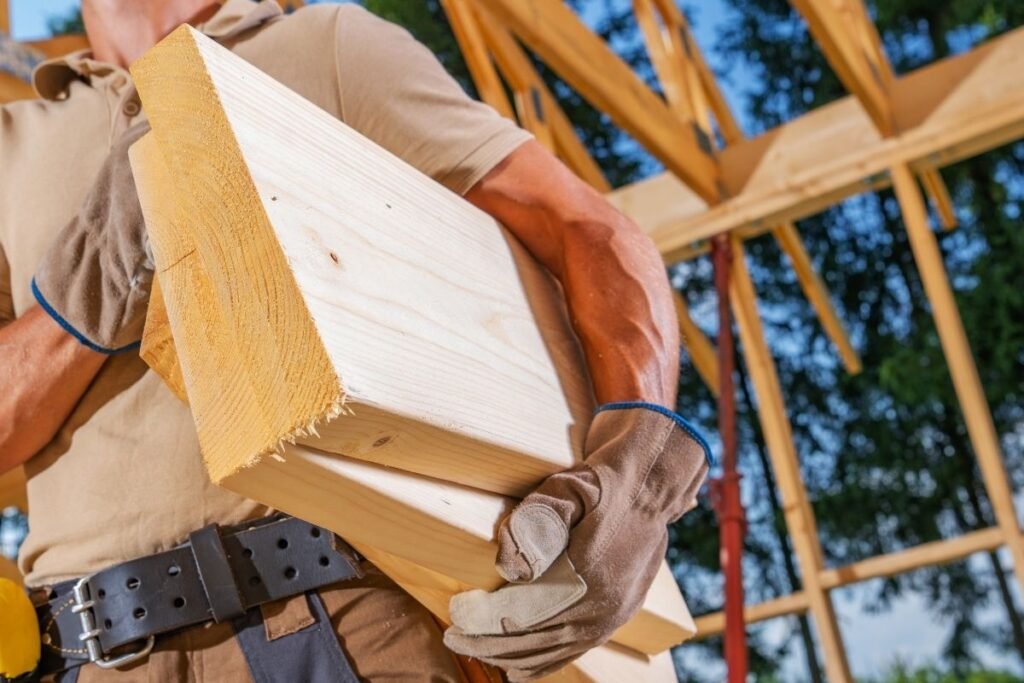
Timber construction is attracting renewed attention across North America. Developers, architects, municipalities, hospitality operators, and commercial property owners are increasingly looking at wood not only as a traditional building material, but also as a practical option for modern structural and outdoor projects.
Part of this interest comes from changing construction priorities. Investors want buildings and outdoor structures that feel distinctive, perform reliably, and create long-term value. At the same time, many projects are placing greater emphasis on renewable materials, faster construction methods, flexible design, and stronger visual identity.
Timber fits naturally into many of these goals.
From commercial buildings and recreational facilities to public spaces, resorts, pavilions, and mixed-use developments, wood-based construction is becoming part of a broader investment conversation across the United States and Canada.
Timber Is Moving Beyond Traditional Residential Construction
For many years, timber construction was associated mainly with houses, cabins, agricultural buildings, and small recreational structures.
That perception is changing.
Engineered wood systems, heavy timber framing, modern fabrication methods, and improved structural design have expanded the range of projects that can use timber effectively.
Today, timber can appear in commercial buildings, educational facilities, hospitality properties, public spaces, offices, event venues, recreation centers, and large outdoor structures.
Investors are paying attention because these projects often combine structural performance with a warm architectural character that can be difficult to achieve with steel or concrete alone.
Timber can therefore serve both a functional and branding purpose.
For a resort, public park, retail development, or recreational property, the visual appearance of the structure can contribute directly to the visitor experience.
Why Investors Are Paying More Attention to Timber
Investment decisions in construction are rarely based on one factor.
Cost matters, but so do lifespan, maintenance, visual appeal, construction speed, sustainability goals, and future property value.
Timber can perform well in several of these areas when it is specified, engineered, and maintained correctly.
One reason investors are considering timber is its ability to create visually recognizable structures.
Commercial properties increasingly compete on experience.
Hotels want memorable common spaces. Resorts want outdoor structures that feel connected to the landscape. Municipal developments want public spaces that feel welcoming. Retail destinations want architecture that makes people stay longer.
Timber can help create that atmosphere without relying entirely on decorative finishes.
The structure itself becomes part of the design.
Heavy Timber Construction Has Strong Visual Value
Heavy timber construction is particularly attractive for projects where structural elements remain visible.
Large posts, beams, trusses, and roof systems can create a sense of permanence while still feeling natural and inviting.
This is one reason timber is often used for pavilions, covered gathering spaces, lodges, restaurants, event venues, entrance structures, and recreational buildings.
For developers evaluating a Heavy timber Pavilion USA project, the investment is often about more than simply creating shelter.
A pavilion can become an architectural centerpiece.
It may support events, community gatherings, outdoor dining, hospitality activities, weddings, recreation, or public programming.
When designed carefully, the structure can add both practical utility and visual identity to a property.
Timber Pavilions Are Becoming Valuable Commercial Assets
Outdoor spaces are playing a larger role in commercial and recreational developments.
Hotels, resorts, parks, campgrounds, residential communities, wineries, event venues, and destination properties are all looking for ways to make outdoor areas more usable.
A permanent pavilion can extend the usefulness of these spaces.
It provides shade, weather protection, gathering space, and a defined location for activities.
From an investment perspective, that can create several advantages.
A hospitality property may use a pavilion for events. A campground may use it for group activities. A residential development may use it as a community amenity. A municipality may use it for markets or public programs.
The structure therefore has the potential to support revenue, improve property appeal, or strengthen the usefulness of the overall site.
The United States Market Offers Diverse Opportunities
The United States has an enormous variety of climates, building types, and development patterns.
Timber construction can therefore serve very different purposes depending on the region.
In mountain and forest destinations, exposed timber can reinforce a rustic or nature-focused design.
In suburban communities, timber pavilions can become shared recreational amenities.
In hospitality developments, they can support weddings, events, dining, and guest activities.
In public parks, they can provide durable gathering spaces for families and community organizations.
The diversity of applications gives investors flexibility.
A heavy timber structure can be designed for a private commercial property, a public facility, a recreational site, or a residential development.
The financial justification will differ from project to project, but the underlying value comes from combining function with architectural appeal.
Canada Has Strong Natural Connections to Timber Design
Canada also has a long relationship with timber as a building material.
Its forestry sector, outdoor culture, and large number of recreational and hospitality destinations make timber construction a natural fit for many projects.
A Heavy timber Pavilion Canada development may appear in a resort, campground, municipal park, outdoor event venue, residential community, or tourism property.
Canadian projects also need to consider local environmental conditions carefully.
Snow loads, freeze-thaw cycles, moisture, wind, and seasonal temperature changes can influence structural design.
These conditions make engineering and material selection especially important.
When the structure is designed for local climate conditions, heavy timber can provide the combination of strength, appearance, and durability that many outdoor developments require.
Sustainability Is Part of the Investment Conversation
Environmental performance is becoming increasingly relevant in construction planning.
Investors, developers, tenants, municipalities, and institutional buyers are paying more attention to material sourcing and lifecycle impact.
Timber can support sustainability objectives because wood is a renewable building material when sourced responsibly.
However, sustainability should not be reduced to a marketing phrase.
The full performance of a timber project depends on several factors, including sourcing, transportation, treatment, design, maintenance, and expected lifespan.
A structure that requires frequent replacement or extensive repair may not deliver the same long-term value as one that is carefully designed for durability.
For investors, the strongest approach is to evaluate timber through both environmental and financial lenses.
Modern Engineering Has Expanded Timber’s Potential
One of the biggest reasons timber construction is attracting more investment is the development of engineered wood systems.
Modern timber construction does not rely solely on traditional dimensional lumber.
Projects may use laminated beams, engineered panels, large structural members, prefabricated components, and advanced connection systems.
These technologies allow designers to create larger spans and more complex structural forms.
They can also improve consistency.
Factory-controlled fabrication can reduce some of the uncertainty associated with producing components entirely on-site.
This is especially useful for projects where appearance matters.
Exposed beams, trusses, and columns need to look as good as they perform.
Precision fabrication can help achieve that result.
Prefabrication Can Improve Construction Efficiency
Construction schedules directly affect investment returns.
A delayed project can increase financing costs, postpone occupancy, and create problems for tenants or operators.
Timber construction can sometimes benefit from prefabrication.
Structural components may be cut, prepared, and partially assembled before arriving at the construction site.
This can reduce the amount of work that must be completed outdoors.
It can also help improve installation speed once the structure reaches the site.
For investors, faster construction can have financial value.
The sooner a commercial structure becomes operational, the sooner it can begin serving tenants, customers, guests, or the public.
However, prefabrication requires careful planning.
Accurate drawings, engineering coordination, site preparation, and logistics all need to be completed before installation begins.
Timber Can Create Stronger Property Identity
Commercial real estate is not only about square footage.
Properties compete for attention.
A resort competes for guests. A restaurant competes for diners. A mixed-use project competes for tenants. A public destination competes for visitors.
Architecture can influence how people perceive these places.
Timber structures often create a strong sense of warmth and craftsmanship.
Exposed wood can make large buildings feel more comfortable.
It can also connect indoor and outdoor spaces visually.
This is particularly valuable for businesses that want their brand to feel natural, premium, welcoming, or experience-driven.
For this reason, timber construction can have marketing value in addition to structural value.
Hospitality Developments Are Strong Candidates
The hospitality sector is particularly well suited to timber construction.
Hotels, resorts, lodges, vineyards, wedding venues, retreats, restaurants, and destination properties often want architecture that creates emotional impact.
Guests remember spaces that feel different.
A well-designed timber structure can become part of the experience.
An entrance pavilion can create a strong first impression.
An outdoor dining structure can extend usable seating.
A wedding pavilion can become a revenue-generating event space.
A covered gathering area can provide flexibility during poor weather.
These functions help explain why hospitality developers are investing in timber beyond purely decorative reasons.
Parks and Public Spaces Are Another Major Area
Municipalities and public organizations also invest in timber structures.
Parks need shelters, community gathering areas, performance spaces, picnic structures, visitor centers, and recreational facilities.
Heavy timber is particularly suited to projects where durability and visual character both matter.
Public structures are used by large numbers of people.
They also need to fit comfortably into natural environments.
Timber can help create a stronger connection between built structures and surrounding landscapes.
However, public projects usually involve strict requirements for engineering, accessibility, safety, maintenance, and procurement.
Investors and developers working with municipalities need to account for those requirements early in the planning process.
Residential Developments Are Using Timber as an Amenity
Residential communities increasingly compete through shared amenities.
Developers may include pools, clubhouses, walking trails, outdoor kitchens, playgrounds, and gathering spaces.
A timber pavilion can become part of that amenity package.
It gives residents a place to host gatherings, relax outdoors, or participate in community activities.
For developers, amenities can influence buyer or renter perception.
A relatively small shared structure may improve the overall experience of a much larger residential project.
That makes the pavilion part of the property’s value proposition.
The investment is therefore not measured only by the cost of the structure itself.
Its value also comes from how it supports the entire development.
Timber Can Support Adaptive and Flexible Spaces
Flexibility is becoming increasingly important in commercial design.
Property owners want spaces that can support multiple uses.
Timber pavilions work well in this context because the same structure can serve different purposes at different times.
A hotel pavilion may host breakfast in the morning, meetings in the afternoon, and private events in the evening.
A public pavilion may support farmers markets, performances, community events, and everyday recreational use.
This flexibility can improve the economic usefulness of the structure.
Investors generally prefer assets that can adapt to changing demand.
A single-purpose structure may become less valuable if its original use declines.
Flexible architecture can help reduce that risk.
Material Costs Still Need Careful Evaluation
Timber construction offers many benefits, but investors still need to evaluate costs carefully.
Wood pricing can fluctuate.
Labor costs vary by region.
Transportation expenses can become significant for large structural members.
Specialized engineering and fabrication can also increase project costs.
The cheapest initial option is not always the best investment.
Investors should compare total lifecycle costs.
This includes installation, maintenance, expected lifespan, repair requirements, and eventual replacement.
For outdoor structures, protective design details are particularly important.
Roof overhangs, drainage, ventilation, moisture management, and connection design can strongly influence long-term performance.
Weather Exposure Must Be Taken Seriously
Outdoor timber structures are constantly exposed to the environment.
Rain, snow, sunlight, humidity, freezing temperatures, and seasonal changes can affect wood over time.
This does not make timber unsuitable.
It simply means design quality matters.
Good projects manage water rather than allowing it to collect around structural components.
They protect vulnerable connections.
They use appropriate finishes and materials.
They also include realistic maintenance plans.
Investors should ask how the structure will perform after ten or twenty years, not just how it will look immediately after construction.
Long-term value depends on that perspective.
Maintenance Planning Protects the Investment
Timber structures require maintenance like any other building system.
The level of maintenance depends on climate, exposure, wood species, finish, structural design, and usage.
Regular inspections can identify problems early.
These may include surface deterioration, moisture accumulation, damaged finishes, loose connections, or areas where drainage is not working correctly.
Preventive maintenance is usually less expensive than major structural repair.
Investors should therefore include maintenance costs in the financial plan from the beginning.
Ignoring future maintenance may make a project appear cheaper during development, but it does not reflect the true cost of ownership.
Local Building Codes Shape Project Decisions
Construction regulations vary across the United States and Canada.
Building codes, fire requirements, structural loads, accessibility standards, zoning, permitting, and environmental rules can all influence timber projects.
This is particularly important for commercial and public structures.
A pavilion used for occasional family gatherings may face different requirements from one designed to host hundreds of visitors.
Investors should work with experienced architects, engineers, and contractors who understand local requirements.
Early code review can prevent expensive design changes later.
It can also help determine whether a proposed project is realistic before significant capital is committed.
Fire Performance Is Part of Structural Planning
Fire safety is an important consideration in any construction project.
Heavy timber behaves differently from lightweight wood framing.
Large wood members can form a charred outer layer during fire exposure, while the remaining interior section continues carrying structural load for a period of time.
However, fire performance should never be assumed.
The building type, occupancy, structural dimensions, code requirements, connections, and fire protection systems all need to be considered by qualified professionals.
Investors should treat fire engineering as part of the overall project strategy rather than as a late-stage compliance issue.
Supply Chains Can Influence Project Economics
Timber projects depend on reliable sourcing.
Large beams and specialty components may need to come from particular manufacturers or regions.
Transportation can therefore become a significant part of the budget.
Long lead times can also affect schedules.
Investors should ask about material availability early.
Can the required timber be sourced locally?
How long will fabrication take?
Are alternative suppliers available?
What happens if delivery is delayed?
These questions are especially important for projects with fixed opening dates, such as resorts, seasonal facilities, or event venues.
Timber Construction Can Support Rural Economic Development
Many timber projects are connected to forestry regions, recreational destinations, and rural communities.
Investment in timber construction can therefore have effects beyond the individual building.
It can support fabrication businesses, contractors, engineering firms, transportation providers, and regional suppliers.
Tourism projects can also benefit from architecture that reflects the surrounding landscape.
A timber pavilion or lodge may feel more appropriate in a forested destination than a highly industrial-looking structure.
This connection between architecture and place can strengthen the appeal of a development.
Institutional Investors Are Watching Building Performance
Large real estate investors increasingly examine operating performance, resilience, maintenance, energy costs, and long-term capital requirements.
Timber construction needs to be evaluated using the same standards.
The fact that a material is natural or visually attractive does not automatically make it a strong investment.
The structure still needs to meet financial objectives.
Investors should evaluate expected lifespan, insurance implications, maintenance requirements, financing, tenant demand, and resale value.
When these factors align, timber can become a practical component of a broader real estate strategy.
Design Quality Has a Direct Financial Impact
Poor design can undermine the benefits of almost any construction material.
Timber is no exception.
Buildings that allow water to collect around beams or connections may experience unnecessary deterioration.
Pavilions with inadequate roof coverage may expose structural elements more than necessary.
Poor ventilation may create moisture problems.
These are design issues, not simply material issues.
Investors should therefore focus on experienced design teams rather than selecting projects based entirely on material cost.
A slightly higher design budget may reduce much larger maintenance expenses later.
Timber Fits the Experience Economy
Many commercial developments now compete by creating experiences rather than simply providing space.
This is visible in hospitality, tourism, retail, recreation, restaurants, entertainment, and mixed-use real estate.
Timber fits naturally into this trend because it creates a strong sensory and visual experience.
People can see the grain, scale, texture, and craftsmanship of the material.
Large timber beams often become architectural features rather than elements that need to be hidden.
That can give properties a memorable identity.
For investment projects where customer experience influences revenue, architectural character can have real economic value.
Long-Term Investment Thinking Is Essential
The strongest timber projects are usually evaluated over decades, not only through the initial construction budget.
Investors need to consider the complete lifecycle.
How long will the structure remain useful?
How much maintenance will it require?
Can it support multiple uses?
Will the architectural style remain attractive?
Can damaged components be repaired?
How difficult will future renovations be?
These questions provide a better picture of value than simply comparing construction costs per square foot.
A project with a higher initial cost may still provide better long-term performance if it remains attractive, useful, and durable for many years.
The Outlook for Timber Investment in North America
Timber construction is likely to remain an important part of the North American building market because it serves several different goals at once.
It can provide structural performance.
It can create distinctive architecture.
It can support outdoor and recreational development.
It can align with sustainability objectives.
It can also help properties create stronger connections with their surroundings.
The strongest growth opportunities are likely to appear where these benefits overlap with clear economic demand.
Hospitality, recreation, public infrastructure, residential amenities, institutional projects, and mixed-use developments all provide potential applications.
For investors, the question is not simply whether timber is becoming more popular.
The more important question is where timber can create enough functional, financial, and architectural value to justify the investment.
Final Thoughts
The growing interest in timber construction across North America reflects a broader change in how developers think about buildings and outdoor spaces.
Commercial projects are expected to perform financially while also creating attractive, flexible, durable, and memorable environments.
Timber can support those goals when it is properly engineered, carefully sourced, and designed for long-term performance.
Heavy timber pavilions are a good example of this shift. They can function as practical shelters while also becoming event spaces, community amenities, hospitality features, or architectural landmarks.
For investors in both the United States and Canada, timber construction offers opportunities across a wide range of property types.
The most successful projects will be those that balance appearance with engineering, sustainability with durability, and construction costs with long-term economic value.
Frequently Asked Questions
Why is timber construction attracting more investment in North America?
Timber can combine structural performance, architectural appeal, flexible design, and sustainability advantages. These characteristics make it useful for commercial, hospitality, recreational, residential, and public projects.
What types of developments commonly use heavy timber?
Heavy timber is commonly used in pavilions, lodges, restaurants, event venues, public shelters, community facilities, resort structures, and other projects where exposed structural elements contribute to the design.
Are heavy timber pavilions suitable for commercial properties?
Yes. They can support outdoor dining, events, recreation, community activities, weddings, and guest services. Their value depends on how effectively the space supports the property’s overall use.
What should investors consider before choosing timber construction?
Important considerations include structural requirements, climate exposure, maintenance, material availability, transportation, local building codes, insurance, fire safety, and long-term lifecycle costs.
How important is maintenance for outdoor timber structures?
Maintenance is essential. Regular inspections, moisture management, appropriate finishes, and timely repairs can help protect structural components and extend the useful life of the building.
Can timber construction support sustainable development goals?
Responsibly sourced timber can support sustainability objectives because wood is renewable. However, investors should also consider durability, transportation, maintenance, and total lifecycle performance.
Why are timber pavilions popular in hospitality and recreation projects?
They provide practical shelter while creating strong visual character. They can also support multiple uses, including events, dining, recreation, and community gatherings, which can improve the overall value of a property.