
Commercial real estate investors have always watched interest rates, tenant demand, location, and operating expenses. Construction costs now deserve the same level of attention. The price of materials can influence everything from the feasibility of a new development to the profitability of renovating an existing property.
When steel, lumber, insulation, concrete, roofing, and exterior building products become more expensive, investors face decisions that extend far beyond the construction budget. Higher costs can change projected returns, delay development schedules, influence financing requirements, and even determine which types of properties are worth pursuing.
As a result, commercial real estate investment is becoming increasingly connected to construction planning. Investors who once focused mainly on acquisition prices and rental income now need to understand material durability, replacement cycles, supply availability, and long-term maintenance costs before committing capital.
Construction Costs Have Become Part of the Investment Strategy
Construction expenses were traditionally viewed as something developers and contractors managed after a project had already been approved. That approach is becoming less practical.
Material prices can change significantly between the early planning stage and the start of construction. A development that appears financially attractive during initial underwriting can become much less appealing if structural materials, roofing systems, mechanical equipment, or exterior finishes increase in price.
For investors, this means construction assumptions need to be tested much earlier. Development budgets increasingly include larger contingencies, alternative material options, and additional supplier research.
Investors are also paying closer attention to how quickly materials can be sourced. A lower-cost material may not actually save money if long lead times delay construction and postpone rental income.
The result is a closer relationship between financial analysis and construction strategy.
Higher Material Prices Can Reduce Development Margins
Commercial developments depend heavily on projected margins. Investors estimate the cost of acquiring land, designing the building, completing construction, financing the project, and eventually operating or selling the property.
When construction costs increase unexpectedly, those margins can shrink quickly.
Suppose an investor plans a warehouse development based on a carefully calculated construction budget. If the cost of steel framing, roofing, exterior cladding, electrical equipment, and concrete rises before construction begins, the total development cost may increase substantially.
The investor then has several choices. Additional capital can be invested, specifications can be changed, construction can be delayed, or the project can be abandoned.
Each option affects the expected return.
This is why many commercial real estate investors now place greater emphasis on conservative cost assumptions rather than building their financial models around the lowest possible construction estimate.
Investors Are Looking More Closely at Durable Materials
Rising construction costs do not always encourage investors to choose cheaper materials. In many cases, they produce the opposite effect.
When replacing building components becomes increasingly expensive, durability becomes more valuable.
Commercial properties often operate for decades. During that period, exterior walls, roofing, windows, mechanical systems, pavement, and interior finishes may require several rounds of maintenance or replacement.
Investors therefore need to consider lifecycle costs rather than simply installation costs.
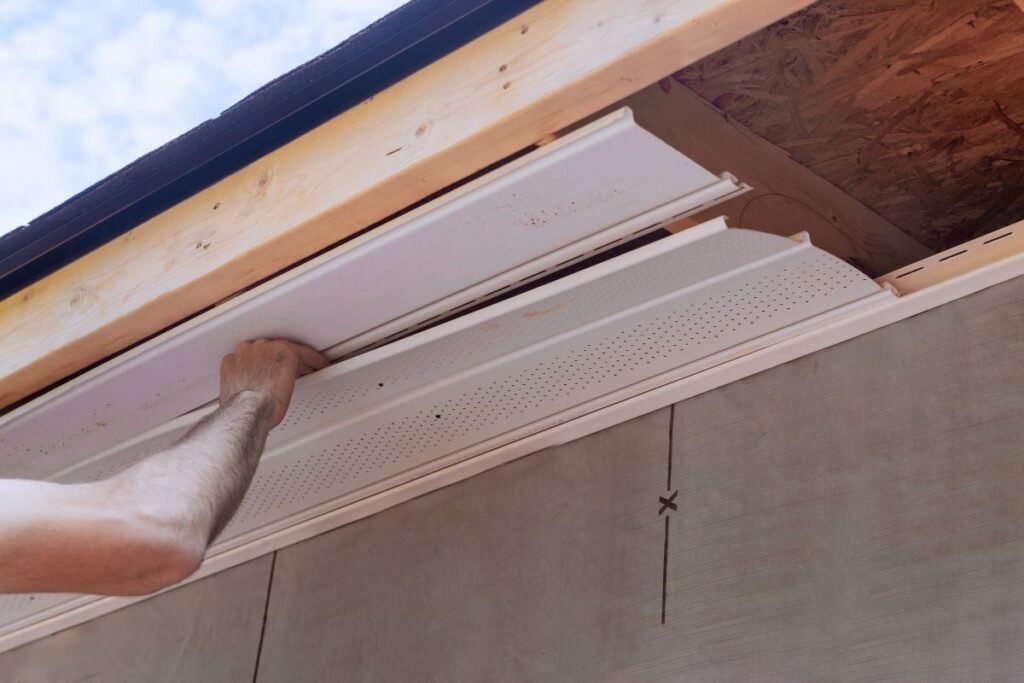
For example, industrial and commercial buildings often use metal siding panels because they can provide durable exterior protection while fitting the practical requirements of warehouses, agricultural buildings, manufacturing facilities, and other large structures. Although the initial material decision affects the construction budget, long-term durability and maintenance requirements can influence the property’s operating costs for many years.
This type of lifecycle analysis is becoming increasingly important as replacement materials and skilled labor become more expensive.
Renovation Projects Are Receiving More Attention
Higher new-construction costs can make existing commercial properties more attractive.
Instead of building from the ground up, investors may purchase older warehouses, retail properties, offices, or industrial buildings and renovate them.
Existing properties already contain valuable components such as foundations, structural systems, parking areas, utilities, and access roads. If those elements remain usable, renovation can sometimes require less capital than constructing a completely new building.
However, renovation brings its own risks.
Older buildings may contain outdated electrical systems, damaged roofs, inefficient insulation, aging plumbing, or structural problems that are difficult to identify before work begins.
Successful investors therefore evaluate renovation opportunities carefully. A low purchase price does not automatically mean a property is inexpensive to reposition.
Detailed inspections and realistic rehabilitation budgets have become increasingly important when comparing existing buildings with new development opportunities.
Industrial Real Estate Can Be Especially Sensitive to Material Prices
Industrial properties often require large quantities of construction materials.
Distribution centers, warehouses, manufacturing plants, logistics facilities, and storage buildings may include extensive concrete slabs, structural steel, roofing systems, wall panels, loading areas, and mechanical equipment.
Even relatively small increases in the cost of individual materials can have a noticeable impact when thousands of square feet are involved.
This creates an interesting challenge for industrial investors.
Demand for logistics and storage space may support new development, yet rising construction costs can make projects harder to justify financially.
Developers may respond by simplifying building designs, improving space efficiency, adjusting specifications, or searching for locations where land and construction costs remain manageable.
Investors who understand these tradeoffs are better positioned to evaluate industrial opportunities realistically.
Construction Costs Can Influence Property Values
Commercial property values are influenced by income, location, tenant demand, interest rates, and replacement costs.
When the cost of constructing a similar building increases, existing properties may become more valuable in certain markets because competitors face a higher financial barrier to creating new supply.
Imagine an area where warehouse demand is growing. Existing industrial properties may become more attractive if building an equivalent warehouse suddenly costs much more than it did several years earlier.
However, higher replacement costs do not automatically increase every property’s value.
Older buildings may require expensive repairs, and buyers will factor those future costs into their offers. Properties with deteriorating roofs, exterior systems, HVAC equipment, or structural components can face significant capital expenditure requirements.
Investors therefore need to evaluate both sides of the equation: the cost of creating new supply and the cost of maintaining existing assets.
Development Timelines Are Becoming More Important
Material availability can be just as important as material price.
Commercial real estate projects generate income only after they are completed and leased. Every month of construction delay can mean additional financing expenses and lost rental revenue.
Long delivery times for electrical equipment, mechanical systems, structural components, windows, or specialized building materials can disrupt carefully planned schedules.
This is why investors increasingly ask questions about procurement before approving development projects.
Which materials have long lead times?
Are alternative suppliers available?
Can certain materials be ordered earlier?
Could specifications be changed if supply becomes limited?
These questions may appear operational, but they have direct financial consequences.
A project completed six months late may produce a very different return than the same project completed on schedule.
Investors Are Building Larger Contingencies Into Projects
Unexpected costs are nothing new in construction. What has changed is the amount of uncertainty investors may need to consider.
A traditional development budget usually includes a contingency allowance for unexpected expenses. Investors may now choose to increase that allowance when material pricing or supply conditions are uncertain.
This reduces the risk that a relatively small price increase creates a major financing problem later.
Larger contingencies can also make underwriting more realistic.
A project that only produces an attractive return under perfect construction conditions may not be a strong investment. Investors increasingly test projects under several scenarios, including higher material costs, longer construction schedules, increased financing expenses, and slower lease-up periods.
Scenario analysis makes it easier to understand how much uncertainty a project can absorb before its expected return becomes unacceptable.
Value Engineering Is Becoming More Common
Value engineering involves finding ways to reduce project costs without significantly reducing functionality or long-term performance.
In commercial construction, this might involve changing materials, simplifying architectural details, standardizing building dimensions, adjusting structural systems, or redesigning certain areas of the property.
The goal is not necessarily to make the building cheaper in every possible way.
Good value engineering looks for areas where money can be spent more efficiently.
For example, an expensive decorative feature may add little value to an industrial warehouse, while investing more in insulation, roofing, or loading infrastructure could improve operating performance and tenant appeal.
Investors are increasingly involved in these conversations because every design decision can affect project economics.
Maintenance Costs Are Becoming More Important in Acquisitions
Material inflation also affects buildings that are already completed.
When an investor purchases an existing commercial property, the acquisition price is only one part of the investment.
Future capital expenses can include roof replacement, exterior repairs, parking lot resurfacing, HVAC replacement, structural maintenance, and interior renovations.
If construction materials become more expensive, those future projects may cost considerably more than historical maintenance records suggest.
Investors therefore need realistic capital expenditure forecasts.
A property that appears inexpensive compared with nearby buildings may actually require substantial investment during the first several years of ownership.
Reviewing the age and condition of major building systems can help investors understand the true cost of owning the property.
Lease Structures May Become More Important
Rising property expenses can also influence how leases are structured.
Commercial landlords often use lease arrangements that shift certain operating costs to tenants. Depending on the property and lease type, tenants may contribute toward taxes, insurance, maintenance, utilities, or common-area expenses.
Large capital improvements are more complicated.
A major roof replacement or exterior renovation may still remain the responsibility of the property owner.
Investors therefore need to understand which expenses can reasonably be recovered through rent and which must be funded directly from ownership capital.
Properties with predictable maintenance needs can be easier to underwrite than buildings with major upcoming repairs.
New Development May Shift Toward Stronger Markets
When construction becomes more expensive, developers often become more selective about where they build.
A project needs enough rental income or resale value to justify the cost of construction.
That means high-cost development may become concentrated in markets where tenant demand, population growth, business activity, or rental rates provide sufficient financial support.
Locations with weaker rental income may struggle to justify new construction.
This can reduce new supply in certain areas.
For investors who already own commercial property in those markets, limited new construction may reduce competition. However, investors considering development must carefully compare achievable rents with total project costs.
Strong demand alone does not guarantee a profitable development if construction costs rise faster than rental income.
Smaller Projects May Become More Attractive
Large commercial developments can create attractive returns, but they also expose investors to significant construction risk.
When material costs are uncertain, some investors may prefer smaller projects.
A smaller warehouse, retail building, mixed-use development, or commercial renovation requires less capital and may be easier to finance.
Smaller developments can also be completed in phases.
Phased construction allows investors to evaluate tenant demand before committing capital to additional buildings.
This strategy can reduce risk in uncertain markets, although it may also increase the total cost per square foot compared with completing the entire project at once.
The right approach depends on financing, location, tenant demand, and the investor’s tolerance for construction risk.
Supplier Relationships Can Affect Investment Performance
Commercial real estate investors traditionally focused heavily on relationships with brokers, lenders, property managers, and contractors.
Supplier relationships are becoming increasingly important as well.
Reliable suppliers can help contractors understand pricing changes, product availability, delivery timelines, and suitable alternatives.
Developers with established supply networks may be able to respond more quickly when certain materials become difficult to obtain.
That flexibility can protect project schedules.
Investors do not necessarily need to manage material purchasing themselves, but they should understand how their development partners handle procurement.
A contractor with strong supplier relationships and realistic purchasing plans may reduce project risk considerably.
Sustainability Can Influence Material Decisions
Energy performance and sustainability considerations are increasingly connected to commercial construction decisions.
Some materials may cost more initially but help reduce future energy consumption or maintenance.
Better insulation, efficient windows, reflective roofing systems, durable exterior materials, and energy-efficient mechanical equipment can reduce operating expenses over time.
These improvements may also make properties more attractive to certain tenants.
However, sustainability investments should still be evaluated financially.
The most expensive option is not automatically the best option. Investors need to compare installation costs, expected savings, maintenance requirements, incentives, and useful lifespan.
The objective is to identify improvements that strengthen both building performance and investment economics.
Financing Can Become More Complicated
Higher construction costs can increase the amount of equity and debt required to complete a project.
Lenders typically examine project costs, expected income, borrower experience, market conditions, and loan-to-cost ratios before providing financing.
If construction expenses rise significantly, investors may need to contribute additional equity.
That can lower the investor’s return on capital.
Financing costs can also increase when construction takes longer than expected. Interest continues accumulating while the building is being completed, even though the property may not yet be generating full rental income.
For this reason, investors increasingly evaluate construction costs and financing costs together rather than treating them as separate parts of the development process.
Investors Are Becoming More Conservative With Underwriting
One of the biggest changes created by construction uncertainty is a more cautious approach to financial forecasting.
Investors may use higher cost assumptions, larger contingencies, slower development schedules, and more conservative rental projections.
This can cause some projects to be rejected.
However, rejecting a financially weak project during underwriting is usually preferable to discovering the problem halfway through construction.
Conservative underwriting creates room for unexpected expenses without completely destroying the economics of the investment.
It also helps investors compare opportunities more accurately.
A project that remains attractive under conservative assumptions may offer a stronger risk profile than one that depends on unusually low construction costs or aggressive rental growth.
Existing Buildings With Recent Improvements May Gain Appeal
Commercial properties that have recently undergone major improvements can become attractive when replacement costs are rising.
A building with a newer roof, updated HVAC equipment, improved exterior systems, modern electrical infrastructure, and renovated interiors may require fewer major capital projects during the first years of ownership.
That can improve cash flow predictability.
Investors may therefore be willing to pay more for well-maintained properties compared with similar buildings that require immediate renovation.
Property owners preparing to sell can benefit from understanding this shift.
Documented maintenance records and recent capital improvements can help buyers evaluate the building’s future expense requirements more confidently.
Construction Knowledge Is Becoming an Investment Advantage
Commercial real estate investing has always required financial knowledge. Increasingly, it also rewards investors who understand buildings.
Knowing how different materials perform, how long major systems typically last, and which repairs are expensive can improve acquisition decisions.
Investors do not need to become engineers or contractors.
However, they should work closely with professionals who can evaluate building conditions and construction budgets accurately.
Architects, engineers, contractors, inspectors, and experienced property managers can provide information that financial spreadsheets alone cannot reveal.
The physical condition of a property ultimately affects its financial performance.
Long-Term Thinking Matters More Than Ever
Rising material costs can encourage short-term cost cutting, but commercial properties are long-term assets.
Choosing the cheapest construction option may reduce the initial budget while creating larger maintenance costs later.
Investors should therefore evaluate materials based on expected lifespan, maintenance requirements, availability, energy performance, and replacement difficulty.
A more expensive component may sometimes provide better value if it lasts significantly longer or requires less maintenance.
The best decisions usually balance initial construction costs with long-term ownership expenses.
That mindset is especially important for investors who plan to hold properties for many years.
Frequently Asked Questions
Why do construction material prices matter to commercial real estate investors?
Material prices directly influence development and renovation budgets. Higher costs can increase financing requirements, reduce expected profit margins, and change the financial feasibility of a project.
Can higher construction costs increase the value of existing properties?
In some markets, they can. When building new commercial properties becomes expensive, existing buildings may become more attractive because replacing them would require significantly more capital. Property condition and future maintenance costs still need to be considered.
Why are investors paying more attention to durable building materials?
Durable materials can reduce future repair and replacement expenses. As both materials and skilled labor become more expensive, reducing the frequency of major maintenance projects can improve long-term property economics.
How can investors protect themselves from construction cost increases?
Investors can use larger construction contingencies, obtain multiple supplier quotes, order long-lead materials early, consider alternative materials, and test projects using higher-cost financial scenarios.
Are renovation projects becoming more attractive than new construction?
They can be, especially when existing structural systems and infrastructure remain in good condition. However, older buildings can contain hidden problems, so detailed inspections and realistic renovation budgets are essential.
What should investors examine before purchasing an older commercial property?
Major areas include the roof, exterior walls, HVAC systems, plumbing, electrical infrastructure, foundation, parking areas, insulation, and structural components. Understanding when these systems may need replacement helps investors estimate future capital expenses.
How does material availability affect commercial property investment?
Unavailable or delayed materials can extend construction schedules. Longer projects may increase financing costs and postpone rental income, which can reduce the overall return on investment.
Final Thoughts
Rising construction material costs are changing how commercial real estate investments are evaluated.
Investors are paying closer attention to development budgets, material durability, procurement timelines, maintenance requirements, financing costs, and renovation opportunities. Construction decisions that once seemed primarily technical now have a direct influence on investment returns.
The shift does not necessarily make commercial real estate less attractive. It simply means investors need to analyze properties more carefully.
New development may require larger contingencies and more conservative assumptions, while existing properties may become more appealing when replacement costs are high. Durable materials and efficient building systems can also become increasingly valuable when repair and replacement expenses continue to rise.
Commercial real estate investors who understand both the financial and physical sides of a property will be better prepared to identify opportunities, control risk, and protect long-term returns.