
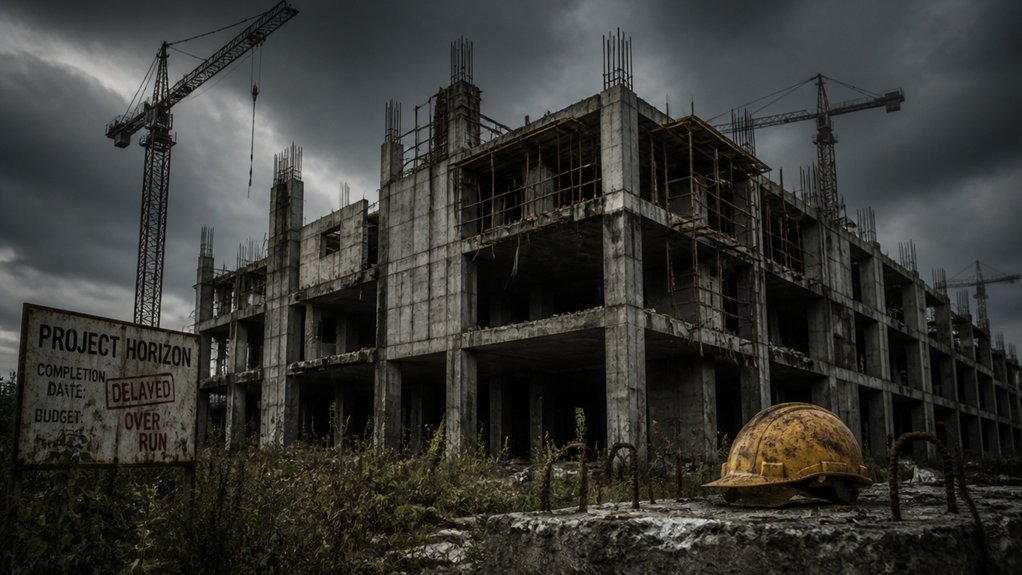
Construction delays quietly erode real estate returns through several interconnected financial channels. Extended timelines push labor costs higher as crews work longer than budgeted. Material prices often climb during prolonged builds, while financing charges accumulate daily like a slow leak.
Market shifts present another hidden danger. Competitors finish their projects first, capturing buyers and tenants in a tightening pool. The completed developments set pricing benchmarks before your project even reaches market. Suddenly, projected rents or sale prices no longer match original pro forma assumptions.
Investors feel the strain most acutely through disrupted cash flows. Debt service continues regardless of construction status. Equity partners grow restless as distributions remain suspended indefinitely. Returns deteriorate not just in absolute terms, but relative to alternative investments they might have pursued.
Understanding the precise translation from lost days to lost dollars separates viable projects from failed ones. Savvy developers build schedule contingencies directly into their underwriting. They know that time, once surrendered, rarely returns to the balance sheet.
The Hidden Costs of Project Delays

Construction delays impose numerous financial burdens on real estate developers, investors, and property owners. Extended timelines increase labor costs, as workers remain on payroll longer than anticipated.
Financing expenses accumulate when loan interest accrues during extended construction periods. Material price fluctuations during delays can inflate project budgets considerably.
Property taxes and insurance premiums continue accruing on incomplete projects. Opportunity costs emerge when capital sits idle instead of generating returns elsewhere.
Market conditions may shift, reducing property values or rental demand. Regulatory fines occasionally apply for missing completion deadlines. These compounding expenses greatly reduce profit margins and investment returns.
How Financing Expenses Compound Each Month
Among the various expenses that accumulate during project delays, financing costs demand particular attention because they compound monthly without generating any corresponding project progress.
A developer borrowing $5 million at 8 percent annually pays approximately $33,000 monthly in interest alone. Each delayed month multiplies this burden, creating exponential growth in total debt. A six-month delay costs $198,000 in financing expenses. A twelve-month delay doubles this figure to $396,000.
These costs consume profit margins and reduce final investment returns substantially.
Developers must account for financing compounding when calculating project timelines and contingency budgets.
Market Demand Shifts and Pricing Pressure
While construction delays extend timelines, market conditions shift independently, creating additional pressure on project profitability.
During extended construction periods, buyer demand may decrease, forcing developers to reduce asking prices. For example, a residential project delayed eighteen months might face competition from newly completed nearby developments, reducing its market advantage.
Interest rates may also rise, decreasing buyer purchasing power and affordability.
Supply changes occur simultaneously, with competing projects launching in the same market. Developers holding delayed projects experience reduced margins as carrying costs accumulate and pricing flexibility diminishes.
Market timing misalignment represents a significant financial risk separate from construction expense overruns.
When Cash Inflows Stall: Revenue Delay Consequences
Because construction timelines extend beyond original schedules, revenue generation delays proportionally, creating immediate cash flow problems for developers and investors.
When project completion dates slip, rental income, sales revenue, and lease payments arrive later than anticipated. This postponement forces organizations to maintain operating expenses, mortgage payments, and staff salaries without offsetting income.
A six-month delay on a commercial property reduces annual returns substantially. Investors expecting dividends face disappointment.
Lenders may demand early repayment. Projects requiring bridge financing accumulate additional interest costs. Extended timelines compress profit margins, requiring developers to either extend holding periods or accept reduced investment yields when eventual sales occur.
Labor and Material Costs Spike When Projects Slip
Project delays trigger escalating expenses across labor and material categories, fundamentally altering project economics. Workers remain on payroll longer, increasing salary costs substantially. Subcontractors impose extended timeline fees, adding thousands monthly.
Material prices fluctuate upward during extended procurement periods, reflecting market inflation and supplier adjustments. Steel, concrete, and lumber experience particular volatility.
Equipment rental extends beyond original budgets, compounding financial strain. Insurance premiums rise with prolonged timelines. Weather-related work stoppages intensify these pressures further.
Developers face margin compression as expenses climb faster than revenue recovery. Project profitability diminishes accordingly, reducing investor returns and affecting future financing availability.
Smart Schedule Management Prevents Cascading Costs
Effective scheduling systems address cost escalation by establishing realistic timelines, resource allocation, and contingency buffers upfront.
Project managers use critical path analysis to identify dependencies, preventing bottlenecks that trigger expensive delays. Software tools like Primavera and Microsoft Project track progress against baselines, enabling early intervention when slippage occurs.
Regular monitoring of labor availability, material delivery dates, and weather impacts allows teams to adjust schedules proactively.
By coordinating subcontractors through detailed sequencing, projects maintain momentum and avoid idle time costs.
Contingency reserves built into timelines absorb minor disruptions without cascading effects throughout construction phases.
Calculate Your Cost: Days Lost × Daily Rate
While schedule management prevents many delays, calculating the financial impact of unavoidable disruptions requires a straightforward formula: daily costs multiplied by the number of days lost.
A residential project losing ten days incurs expenses across labor, equipment rental, and financing costs. If daily carrying costs total $5,000, ten lost days equal $50,000 in additional expenses.
Project managers identify daily rates by summing worker wages, machinery rental fees, and interest on construction loans.
Accurate cost calculations enable stakeholders to understand delay consequences, justify remediation investments, and assess project viability. This mathematical approach transforms abstract schedules into concrete financial figures.
Frequently Asked Questions
How Do Construction Delays Impact Property Value Appreciation and Long-Term Investment Returns?
Construction delays diminish property value appreciation by extending holding periods, increasing carrying costs, and deferring rental income generation. They compress investment returns, reduce competitive market positioning, and elevate financing expenses, ultimately weakening long-term profitability for real estate investors.
What Legal Remedies Exist for Investors Facing Delays From Contractors or Developers?
Studies indicate construction delays cost projects approximately 10% of their total budget. Investors can pursue legal remedies including breach of contract claims, liquidated damages recovery, specific performance enforcement, and arbitration proceedings against contractors or developers responsible for project postponements.
Can Construction Delays Trigger Force Majeure Clauses in Real Estate Investment Contracts?
Force majeure clauses typically protect against unforeseeable circumstances beyond parties’ control, such as natural disasters or pandemics. Ordinary construction delays usually do not qualify unless caused by covered events. Contract language determines whether specific delay types trigger protection.
How Do Delays Affect Tenant Acquisition Timelines and Lease Commencement Dates?
Construction delays push back tenant acquisition timelines and lease commencement dates, reducing early revenue generation. Prolonged vacancies increase carrying costs, diminish investor returns, and may trigger lease termination clauses if occupancy deadlines aren’t met.
What Insurance Options Protect Real Estate Investors Against Construction Delay Financial Losses?
Construction delays can literally bankrupt projects overnight. Investors protect themselves through Builders Risk insurance, Delay in Completion coverage, and Contingent Business Interruption policies. These instruments reimburse lost rental income, carrying costs, and financing expenses stemming from schedule overruns.
Conclusion
Construction delays function like a leaking bucket, draining project profitability through multiple channels simultaneously. Extended timelines compound financing costs, erode market demand, and inflate labor and material expenses. Revenue postponement strains cash flow, weakening investor confidence. Project managers must implement rigorous schedule controls, monitoring daily progress against benchmarks. Each delayed day multiplies costs exponentially, making timeline adherence essential for protecting real estate investment returns and maintaining financial viability.