
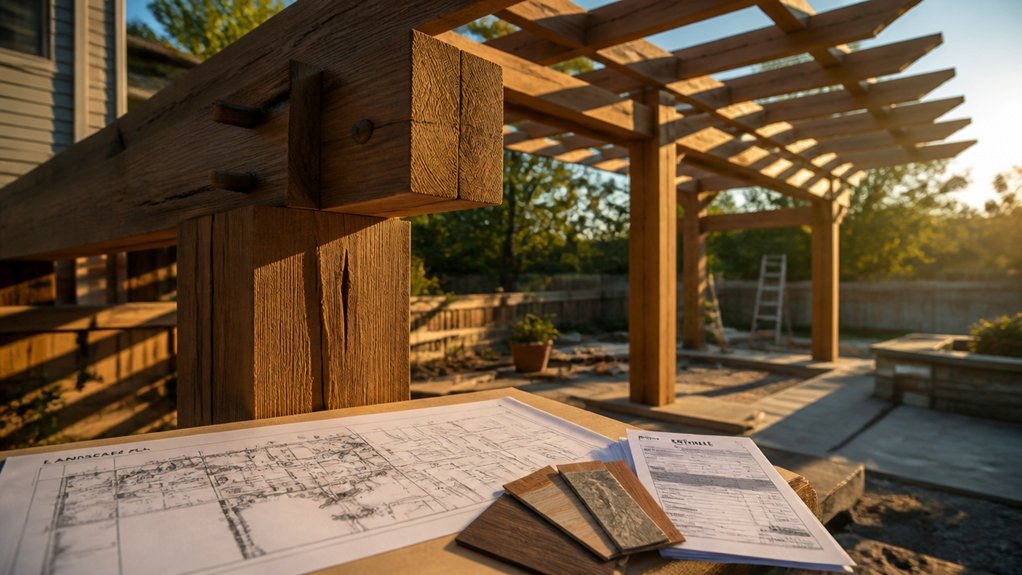
Timber pergola projects demand thoughtful budget planning. Material costs, labor expenses, and surprise fees accumulate quickly and shape the total investment in significant ways.
Selecting the right wood matters more than many homeowners realize. Pressure-treated pine offers affordability upfront, while premium cedar or ipe command higher initial prices but deliver durability that pays off over decades. This choice ripples through maintenance schedules and replacement timelines.
Location and design details introduce their own cost layers. Remote sites raise delivery and labor rates, complex rooflines add material waste, and permits or HOA approvals bring fees that rarely appear in early estimates. Mapping these variables early prevents budget shock later.
Smart resource allocation separates successful projects from stressful ones. Some corners simply cannot be cut without consequence, but strategic decisions about joinery, finish grade, or dimension lumber can protect quality while easing the financial load.
Material Selection: How Wood Type Impacts Your Total Cost
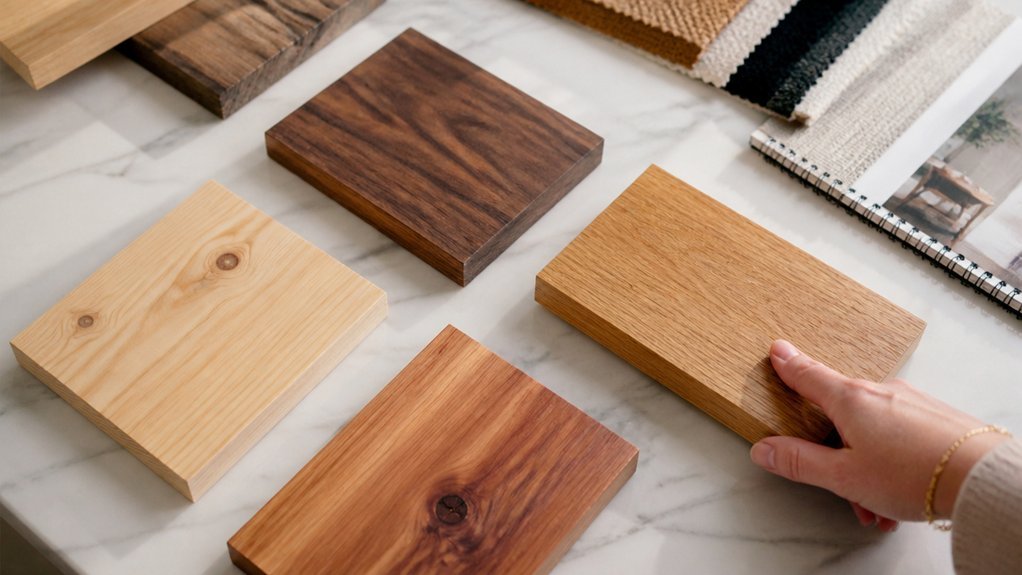
Wood selection serves as the foundation for pergola pricing, with different species offering varying durability, appearance, and cost characteristics.
Pressure-treated pine costs considerably less, ranging from $2 to $4 per board foot, making it budget-friendly for basic structures. Cedar and redwood command higher prices, approximately $5 to $8 per board foot, due to natural rot resistance and aesthetic appeal.
Tropical hardwoods like ipe cost $10 to $15 per board foot but require minimal maintenance over decades. Softwoods deteriorate faster, necessitating regular staining and sealing, increasing long-term expenses.
Hardwoods withstand weather better, reducing maintenance costs substantially. Project longevity and maintenance requirements directly influence total investment decisions.
Design Complexity: Why Bigger Isn’t Always More Expensive
While material selection establishes the foundation of pergola pricing, the complexity of design decisions presents another significant cost factor that operates independently of size alone.
A straightforward rectangular pergola measuring sixteen by twenty feet may cost less than an eight-by-twelve structure featuring curved beams, lattice patterns, and integrated lighting systems. Intricate designs require additional labor, specialized cuts, and custom joinery techniques.
Simple open-beam pergolas demand fewer components and simpler assembly processes, reducing expenses considerably.
Decorative elements, angled supports, and built-in seating increase complexity and costs regardless of overall dimensions. Homeowners should evaluate whether ornamental features justify expenses before finalizing designs.
How Your Location and Installer Choice Affect Labor Costs
Labor costs for timber pergolas vary considerably based on geographic location and installer selection, often rivaling or exceeding material expenses in the final budget. Urban areas typically charge higher hourly rates than rural regions, with contractors in California and New York averaging $50-75 per hour compared to $30-45 in less populated areas.
Experienced installers command premium pricing but often deliver superior craftsmanship and efficiency. Homeowners should obtain multiple quotes from licensed contractors, verify insurance coverage, and confirm timeline estimates.
Regional labor availability, local building codes, and project accessibility directly influence pricing structures and overall project costs.
Unexpected Costs: Permits, Structural Upgrades, and Site Prep
Beyond material and labor expenses, homeowners encounter several additional costs that greatly impact timber pergola budgets.
Building permits typically range from $100 to $500, depending on local regulations and project scope.
Structural upgrades may prove necessary if existing foundations cannot support the pergola’s weight, requiring concrete work or reinforcement at $200 to $1,000.
Site preparation involves clearing vegetation, leveling ground, and removing obstacles, costing $150 to $800.
Utility line marking is essential before excavation, often required by law.
Unexpected underground obstacles like rocks or tree roots can increase expenses greatly. These hidden costs frequently account for 15 to 25 percent of total project expenses.
Trade-Offs That Save Money Without Cutting Corners
Strategic material and design choices can reduce timber pergola costs by 10 to 20 percent, while maintaining structural integrity and aesthetic appeal.
Homeowners can select pressure-treated pine instead of premium cedar, achieving durability at lower prices. Simplifying designs by reducing decorative elements, choosing standard beam sizes, and minimizing custom cuts decreases labor expenses.
Purchasing materials during off-season sales or from local suppliers often yields discounts. Selecting locally sourced timber reduces transportation fees.
Combining budget materials for structural components with selective upgrades for visible areas balances cost savings with visual quality, ensuring the project remains functional and attractive.
Typical Pergola Costs: Real Prices by Size and Material
Timber pergola prices vary greatly based on dimensions, wood type, and construction complexity. A basic 10-by-10-foot pressure-treated pergola costs between $1,500 and $3,000, while cedar versions range from $2,500 to $5,000.
Larger structures, measuring 12-by-16 feet, typically cost $4,000 to $8,000 in pressure-treated wood, or $6,000 to $12,000 in cedar. Premium hardwoods like ipe or cumaru push prices higher, reaching $10,000 to $20,000 for similar sizes.
Labor installation adds $1,000 to $3,000 depending on complexity, local rates, and site conditions.
Material quality, finishing treatments, and decorative elements greatly influence final project costs.
Building Your Budget: A Practical Estimation Framework
Creating a pergola budget requires organizing costs into three main categories: materials, labor, and site preparation.
Materials typically include timber, fasteners, and finishing products. Labor costs depend on complexity and local rates, ranging from $50 to $150 per hour. Site preparation involves clearing, leveling, and foundation work.
Homeowners should add a contingency fund of 10-15% for unexpected expenses. Obtaining multiple contractor quotes helps establish realistic pricing.
Recording all estimates in a spreadsheet allows side-by-side comparison. This structured approach prevents budget overruns and guarantees accurate financial planning for timber pergola projects.
Frequently Asked Questions
How Long Do Timber Pergolas Typically Last Before Requiring Replacement or Major Repairs?
Timber pergolas typically last 10 to 15 years before requiring major repairs or replacement, depending on wood type, climate conditions, and maintenance practices. Softwoods deteriorate faster than hardwoods, while proper sealing and regular upkeep can greatly extend their structural longevity.
What Maintenance Schedule and Annual Costs Should Homeowners Budget for Long-Term Pergola Care?
Homeowners should inspect pergolas quarterly yet treat them annually, spending modestly on prevention while facing substantial expenses without it. Budget $200-500 yearly for staining, sealing, and minor repairs to extend longevity considerably.
Does Adding a Pergola Increase Property Value or Appeal to Potential Home Buyers?
A well-maintained pergola can enhance curb appeal and create desirable outdoor living space, potentially attracting buyers. However, property value increases typically depend on local market preferences, installation quality, and overall landscape integration rather than the structure itself.
Are There Financing or Payment Plan Options Available for Large Pergola Installation Projects?
Many contractors offer payment plans, allowing homeowners to spread costs over several months. Additionally, home improvement loans, lines of credit, and financing through construction companies provide accessible options for substantial projects.
How Do DIY Pergola Builds Compare in Cost to Hiring Professional Contractors for Installation?
DIY pergola builds typically cost 40-60% less than professional installation, requiring only materials and tools. However, professionals provide expertise, faster completion, and warranty coverage, making hired contractors worthwhile for complex designs or time-constrained projects.
Conclusion
Timber pergola budgets require careful planning across multiple cost factors: material selection, design complexity, labor rates, and hidden expenses. Homeowners must balance initial savings with long-term maintenance costs, comparing pressure-treated pine against durable hardwoods like cedar. How can one justify choosing cheaper materials if replacement occurs within five years? Establishing a realistic budget framework, including permits and site preparation, prevents financial surprises and guarantees successful project completion.