
Construction costs sit at the heart of every real estate investment decision. Material prices fluctuate with global supply chains, labor markets tighten unexpectedly, and timelines slip for reasons beyond anyone’s control. What looked like a healthy margin during planning can shrink to almost nothing by the time crews break ground.
Hidden expenses rarely appear in initial spreadsheets. Permit delays stack up daily carrying costs. Financing charges compound while projects wait for approval. Soil conditions, buried utilities, or weather surprises demand sudden cash infusions. Each of these factors alone might seem manageable; together they demolish projected returns.
Smart investors build breathing room into their numbers from the start. They research local contractor availability, stress-test scenarios against cost inflation, and maintain contingency reserves that would make conservative accountants wince. This preparation separates profitable projects from expensive lessons.
How Construction Cost Overruns Eat Into Your Profit Margins
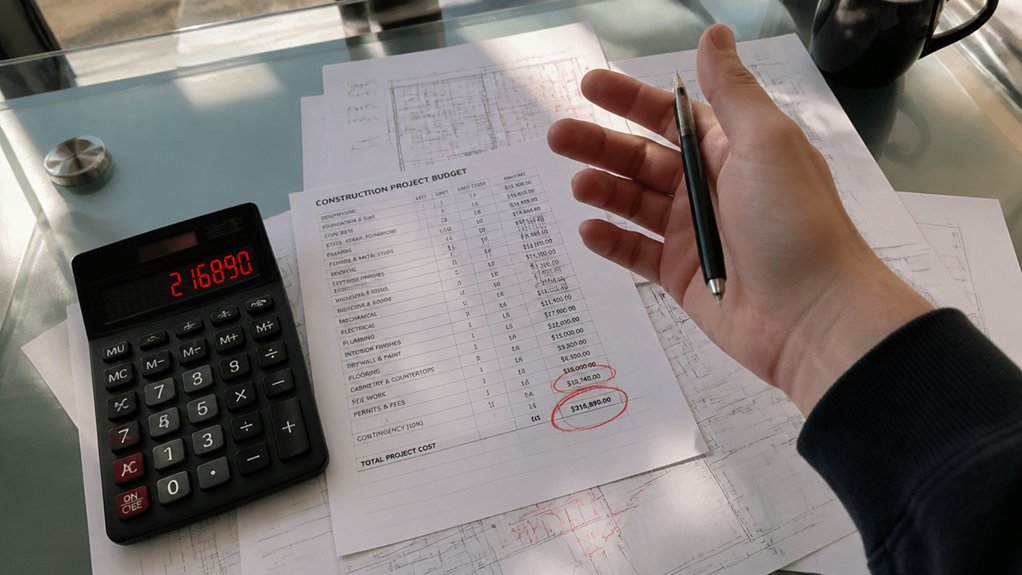
Many real estate investors discover that construction cost overruns greatly reduce their expected returns. When budgets exceed projections, profit margins shrink notably. For example, a renovation estimated at $200,000 that costs $250,000 eliminates planned earnings.
Common culprits include material price increases, labor shortages, design changes, and unexpected structural issues.
Investors protecting themselves implement several strategies: obtaining detailed contractor bids, building contingency reserves of ten to fifteen percent, conducting regular site inspections, and documenting all change orders.
These measures help identify cost problems early, preventing small overages from becoming substantial losses that undermine investment viability and overall portfolio performance.
What Hidden Costs Are You Missing (And How They Reduce Returns)?
Beyond the visible construction expenses, real estate investors often overlook costs that silently erode returns.
Permit delays increase labor costs, extending timelines by weeks or months. Utility connection fees, soil testing, and environmental assessments add thousands unexpectedly. Insurance premiums rise during construction phases, protecting against liability claims. Financing costs accumulate when projects extend beyond initial schedules.
Contingency funds, typically ten to twenty percent of budgets, frequently prove insufficient for unforeseen issues like structural damage or code violations. Property taxes continue accruing throughout construction periods.
These hidden expenses compound quickly, substantially reducing net investment returns without appearing in preliminary cost estimates, requiring careful tracking throughout project completion.
How to Calculate Your Break-Even Point Before Breaking Ground
Before committing capital to a construction project, investors must determine the break-even point, the moment when cumulative revenues match total invested costs. This calculation requires adding all expenses: land acquisition, permits, labor, materials, contingency reserves, and financing costs.
Then, investors project monthly or quarterly rental income, sales revenue, or both combined. Dividing total costs by monthly revenue shows how many months until recovery occurs. A $2 million project generating $15,000 monthly breaks even in approximately 133 months.
Investors should target break-even within 60-80% of the project’s expected holding period, ensuring adequate profit margin and accounting for market fluctuations, vacancy rates, and operational expenses.
Why Material Prices and Labor Volatility Derail Timelines
Construction projects rely on stable input costs, yet material prices and labor rates fluctuate unpredictably, causing delays and budget overruns. Steel and lumber prices swing based on market demand, supply chain disruptions, and commodity trading.
Labor availability varies seasonally, affecting construction schedules and wage rates. Contractors often lock in pricing for specific periods, but extended timelines expose projects to cost increases beyond initial estimates.
When material costs rise mid-project, investors face difficult choices: absorb expenses, reduce scope, or delay completion. These variables directly reduce project profitability and extend cash flow timelines, impacting overall investment returns markedly.
How to Lock In Costs and Protect Your Bottom Line
Securing fixed-price contracts and locking in material costs early shields real estate investors from the volatility discussed previously. Investors obtain written estimates from suppliers, committing to specific prices for lumber, steel, concrete, and other materials before construction begins.
Similarly, labor agreements establish set wages for the project duration, preventing wage inflation from eroding profits.
Surety bonds and performance guarantees protect against contractor defaults. Bulk purchasing discounts reduce per-unit expenses.
Phased construction schedules allow cost adjustments between phases. These mechanisms collectively stabilize budgets, enabling investors to forecast returns accurately and protect margins against market fluctuations.
How Much Contingency Reserve Does Your Deal Actually Need?
How much should a real estate investor actually set aside for contingencies? Industry standards recommend 10-20% of total construction budgets, though project complexity determines actual needs. Renovation projects typically require 15-20%, accounting for hidden structural issues, permit delays, and material price fluctuations.
New construction demands 10-15%, since blueprints provide clearer cost visibility.
Contingency reserves address unforeseen expenses: foundation problems, code violations, labor shortages, and supplier delays.
Experienced investors analyze specific project risks before calculating reserve amounts. Small residential projects may need lower percentages, while commercial properties warrant higher allocations.
Underfunding reserves creates financial strain; overfunding reduces investment returns unnecessarily. Precise contingency planning protects profitability.
How to Use Construction Cost Data to Evaluate Multiple Deals
When evaluating multiple real estate deals simultaneously, investors must compare construction cost data across projects to identify the strongest opportunities. Standardizing costs per square foot allows direct comparison between properties of different sizes.
For example, a 50,000-square-foot office building at $150 per square foot differs markedly from a 10,000-square-foot retail space at $180 per square foot.
Tracking material costs, labor expenses, and timeline requirements reveals project efficiency. Investors should benchmark against local market averages, noting regional variations.
Comparing contingency percentages across deals highlights risk management approaches.
This systematic analysis enables investors to allocate capital toward projects with ideal cost-to-return ratios and manageable construction risks.
Frequently Asked Questions
How Do Construction Costs Impact Property Valuation After Project Completion?
Construction costs directly influence property valuations post-completion. Higher construction expenses typically increase final property values proportionally. However, market conditions, location desirability, and comparable sales ultimately determine whether investors achieve profitable returns on their construction investments.
What Financing Options Are Best Suited for Construction-Heavy Real Estate Investments?
Picture blueprints stacked high, timelines stretching forward—construction financing demands tailored solutions. Construction loans, bridge financing, and joint ventures with experienced partners prove most effective, offering flexible draws aligned with project phases and completion milestones.
Can Construction Delays Negatively Affect Rental Income During Development Phases?
Yes, construction delays substantially impact rental income during development phases. Properties unable to achieve occupancy as scheduled experience lost revenue streams. Investors face extended holding periods, increased carrying costs, and reduced overall returns on their real estate investments.
How Does Local Building Code Compliance Influence Overall Construction Project Costs?
Apparently, following rules costs money—who knew? Local building codes greatly increase project expenses through mandatory inspections, safety upgrades, and compliance documentation. Non-compliance risks fines and project delays, making regulatory adherence ultimately cheaper than cutting corners.
What Tax Deductions or Credits Apply to Construction Expenses in Real Estate?
Investors may deduct construction costs as capital improvements, depreciate building components over designated periods, and claim energy-efficient credits. Section 179 expensing and bonus depreciation offer accelerated deductions, while rehabilitation tax credits apply to historic properties.
Conclusion
Construction costs function like water leaking from a bucket—small holes drain profits quickly if left unpatched. Investors who implement fixed-price contracts, maintain adequate contingency reserves, and analyze detailed cost data protect their returns effectively. By understanding material volatility, labor fluctuations, and hidden expenses before breaking ground, real estate professionals can lock in profitability and achieve break-even timelines with confidence and predictability.