
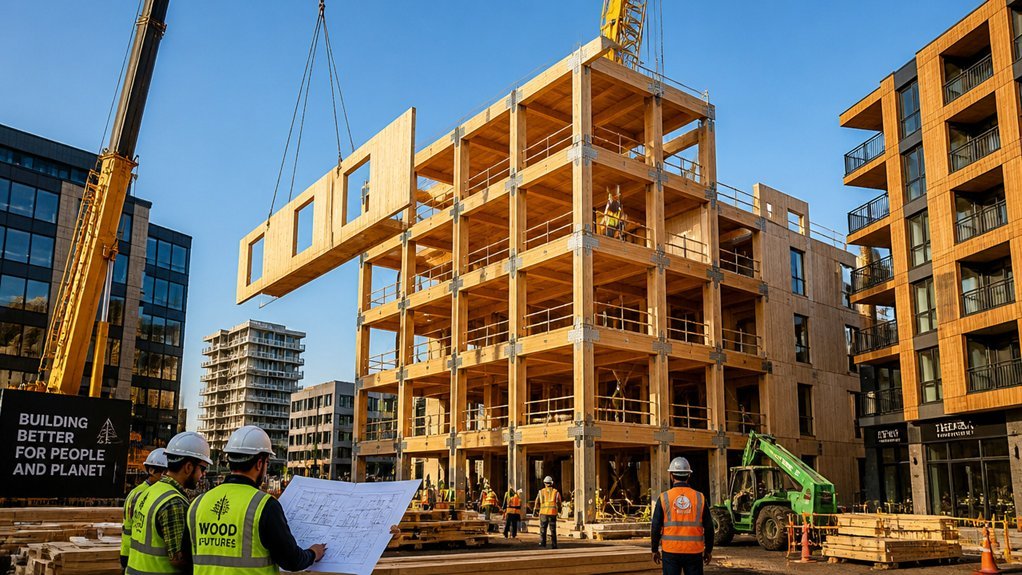
Timber construction is quietly transforming how we build cities, offering a genuine alternative to concrete and steel that developers are increasingly embracing. Cross-laminated timber has emerged as a standout material for mid-rise and even high-rise projects, cutting down both construction timelines and labor costs in measurable ways.
The possibilities for taller timber buildings have expanded dramatically. Updated fire treatments now meet rigorous safety standards, while building codes across several regions have evolved to permit greater heights. These changes reflect years of testing and real-world performance data that have gradually shifted regulatory perspectives.
Investors are taking notice for reasons beyond economics. The environmental case grows stronger as studies quantify the lower carbon emissions tied to timber sourcing and assembly. For portfolio managers prioritizing greener holdings, mass timber projects present an increasingly attractive proposition.
What ultimately determines how far this shift extends? The interplay of financing structures, actual project costs, and proven developments already in operation will shape adoption rates. Watching these elements converge offers a clear window into where real estate development heads next.
Why Developers Are Switching From Concrete and Steel to Timber
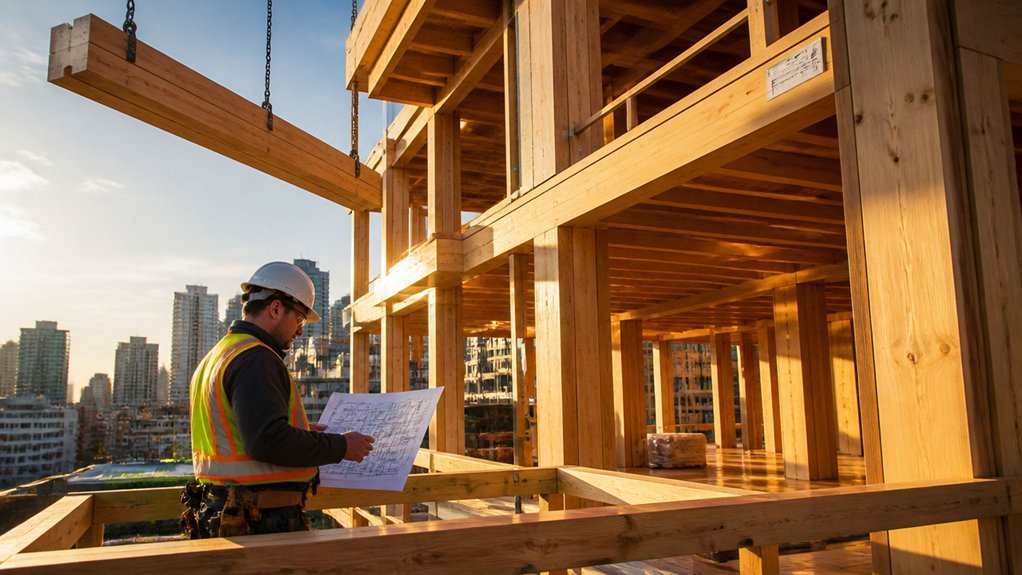
The construction industry is gradually shifting toward timber as a primary building material for mid-rise and high-rise projects. Developers cite reduced construction timelines, lower labor costs, and decreased environmental impact compared to concrete and steel.
Cross-laminated timber (CLT) offers structural strength while reducing building weight, lowering foundation expenses.
Projects like the 18-story Ascent building in Milwaukee demonstrate timber’s viability for tall structures. Insurance costs decrease due to improved fire-rating technologies in engineered wood products.
Additionally, timber construction generates less waste during assembly, appeals to environmentally conscious investors, and requires fewer heavy machinery operations on job sites, ultimately improving project economics and sustainability metrics.
Timber’s Climate Edge: Carbon Savings vs. Traditional Materials
Timber construction delivers measurable carbon advantages over concrete and steel throughout a building’s lifecycle. Wood sequesters carbon dioxide during growth, storing it within the material itself.
Concrete production generates approximately 8% of global emissions, while steel manufacturing produces significant greenhouse gases. Timber requires substantially less energy to process and transport compared to these alternatives. A wood-framed office building produces roughly 50% fewer emissions than a steel-equivalent structure.
Cross-laminated timber panels reduce embodied carbon by storing atmospheric carbon long-term. Developers using timber in mid-rise projects demonstrate lower overall carbon footprints, making environmental compliance more achievable while maintaining structural performance and building durability standards.
How Timber Enables Mid-Rise and High-Rise Buildings
Beyond its environmental benefits, modern timber technology now supports construction of mid-rise and high-rise buildings that previously required steel or concrete frameworks.
Cross-laminated timber, or CLT, enables developers to build structures reaching eight to twelve stories efficiently. Mass timber panels stack vertically, providing strength comparable to traditional materials while reducing overall weight.
Projects like the 18-story Framework in Portland demonstrate feasibility. Engineered timber components use glued laminations and finger-jointing techniques to achieve necessary load-bearing capacity.
Building codes in Canada, Europe, and increasingly North America now permit timber construction at greater heights, expanding developer options for residential, office, and mixed-use projects considerably.
Fire-Safe Timber: Why Building Codes Now Support High-Rise Construction
Although wood is combustible, modern fire-safety treatments and construction methods have transformed timber’s performance in high-rise buildings, leading code officials to approve structures previously considered too risky. Fire-retardant coatings, intumescent paints, and engineered mass timber products like cross-laminated timber (CLT) resist ignition and slow flame spread.
Building codes now permit timber in structures up to 18 stories in some jurisdictions.
Automatic sprinkler systems, compartmentalization, and fire-rated assemblies further enhance safety. Testing data from buildings in Canada, Europe, and Australia demonstrated timber’s reliability under controlled fire conditions, shifting regulatory perspectives and enabling developers to pursue taller wooden structures.
Cost and Timeline Advantages of Timber Construction
With fire-safety concerns now addressed through modern building codes and proven construction methods, developers and builders can focus on another significant advantage that timber offers: faster project completion and reduced expenses.
Timber framing requires less on-site labor compared to concrete or steel construction, since prefabrication occurs in controlled factory settings.
Assembly time decreases substantially, shortening project timelines by months. Material costs remain competitive, particularly for mid-rise residential projects between five and twelve stories.
Reduced labor expenses and faster occupancy dates improve financial returns.
These economic benefits make timber construction increasingly attractive for developers managing budget constraints and market competition.
Financing Timber Projects: Banks, Insurance, and Returns
Most financial institutions now recognize timber construction as a viable investment category, though lending practices and insurance requirements continue to evolve.
Banks increasingly offer favorable loan terms for CLT and mass timber projects, viewing them as lower-risk developments.
Insurance premiums remain competitive with traditional construction, though underwriters require fire-safety documentation and structural certifications.
Project returns show promise, with faster completion timelines reducing carrying costs. Investors report 15-20% improved ROI compared to conventional methods.
Lenders like Wells Fargo and regional banks have developed timber-specific lending divisions.
However, appraisal challenges persist, as property valuations depend on local market acceptance and comparable sales data availability.
Real-World Timber Projects: What Leading Developers Are Building
Several major developers have successfully delivered large-scale timber construction projects across North America, demonstrating that CLT and mass timber buildings function effectively in commercial and residential markets.
Catalyst Paper’s Vancouver office tower, completed in 2022, features five stories of cross-laminated timber.
Brookfield Properties developed mixed-use timber structures in Toronto, combining retail and residential spaces.
The Timberline development in Portland includes 400 housing units with timber framing.
These projects show consistent cost performance, reduced construction timelines, and lower environmental impact compared to concrete and steel alternatives.
Developers continue expanding timber applications in mid-rise buildings, proving market viability and scalability.
Frequently Asked Questions
What Are the Main Challenges in Sourcing Sustainable Timber for Large-Scale Construction Projects?
Developers face significant obstacles securing certified sustainable timber at scale, including limited supply from responsibly managed forests, higher costs compared to conventional sources, complex certification verification processes, and inconsistent availability across global markets.
How Does Timber Construction Impact Indoor Air Quality and Occupant Health?
Timber construction regulates humidity levels, reduces off-gassing, and minimizes volatile organic compounds. Wood naturally absorbs and releases moisture, creating ideal indoor conditions. Studies demonstrate timber buildings produce fewer airborne pollutants, supporting respiratory health and occupant well-being considerably.
What Specialized Skills and Training Do Workers Need for Timber Construction?
Workers require specialized training in timber framing techniques, structural carpentry, and mass timber assembly. They must understand wood properties, connection systems, fire safety protocols, and building codes specific to timber construction projects.
How Do Timber Buildings Perform During Earthquakes and Extreme Weather Events?
Can buildings constructed from nature’s material actually withstand nature’s fury? Timber structures demonstrate exceptional earthquake resilience through flexibility and reduced mass, while modern treatments enhance fire and weather resistance. Research confirms they perform comparably to conventional construction methods.
What Are the Long-Term Maintenance Requirements for Timber-Constructed Buildings?
Timber buildings require regular inspections for moisture damage, pest infestations, and wood decay. Maintenance includes protective coatings, ventilation systems, and structural treatments. Proper upkeep extends lifespan markedly, though timber demands more frequent attention than concrete structures.
Conclusion
Timber construction functions as a bridge between two worlds: the established infrastructure of concrete and steel, and the emerging landscape of sustainable development. Developers crossing this bridge discover efficiency, environmental responsibility, and financial viability. As building codes evolve and technology advances, timber becomes the practical pathway forward. The real estate industry shifts not through abandonment of proven methods, but through integration of superior alternatives that serve both economic and ecological needs simultaneously.