
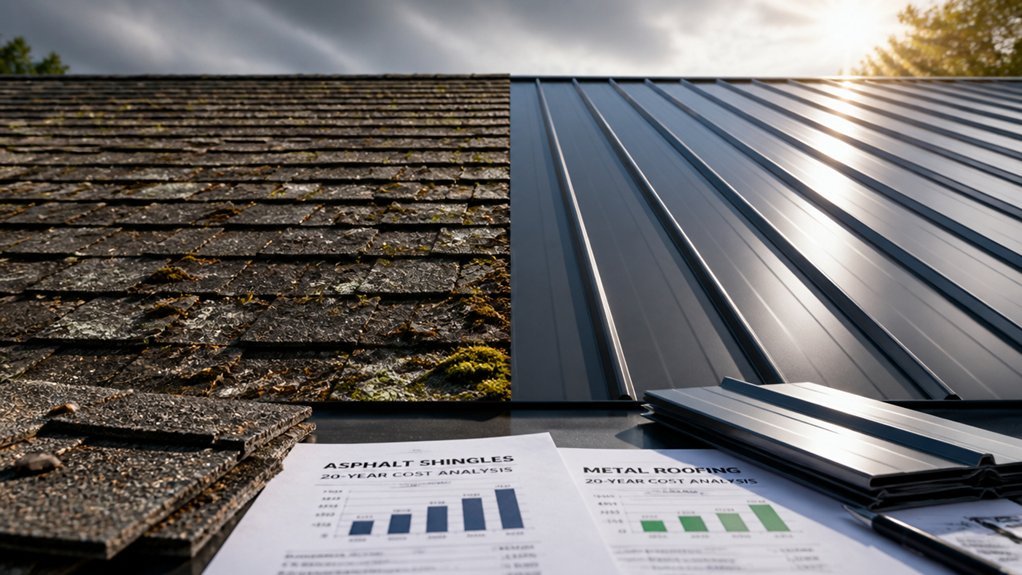
Metal roofing and traditional asphalt shingles tell very different financial stories over time. A quality metal roof typically runs between $10,000 and $20,000 at installation. Meanwhile, asphalt shingles usually land in the $5,000 to $10,000 range, which explains their persistent popularity.
The gap narrows considerably when lifespan enters the equation. Metal roofs routinely protect homes for 40 to 70 years with minimal intervention. Asphalt, by contrast, often needs replacement within 15 to 30 years depending on climate and installation quality.
Hidden factors deserve attention beyond sticker prices. Metal reflects solar heat, trimming cooling bills in warm regions. Its resistance to rot, insects, and fire also suppresses maintenance spending across decades. These quieter savings accumulate substantially.
Smart comparison demands looking past the first invoice. Tallying total ownership costs over 30 or 50 years often flips the apparent bargain. For homeowners planning to stay put, metal frequently emerges as the thriftier path despite its steeper entry point.
Metal vs. Traditional Roofing: Which Pays for Itself?
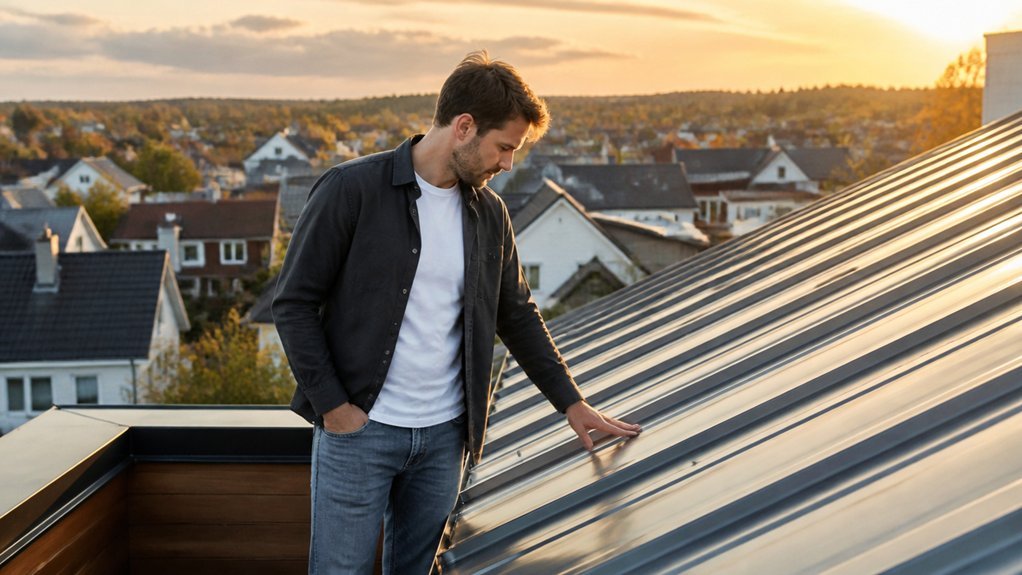
When comparing roofing materials, homeowners often wonder which option delivers better long-term financial value.
Metal roofing typically costs more upfront, ranging from $10,000 to $20,000 for an average home, while traditional asphalt shingles cost $5,000 to $10,000.
However, metal roofs last 40-70 years compared to asphalt’s 15-25 year lifespan. Metal requires minimal maintenance, reducing long-term expenses.
Energy savings from metal’s reflective properties can lower cooling costs by 10-25% annually.
When calculating total cost over decades, metal roofing often proves more economical, particularly in regions with extreme weather, frequent storms, or intense sun exposure.
Upfront Cost Comparison: Why Metal Costs More
Several factors explain why metal roofing demands a markedly higher initial investment than traditional asphalt shingles.
Metal materials, including aluminum and steel, cost considerably more per square foot than asphalt composition.
Installation requires specialized labor, training, and equipment, increasing labor expenses substantially.
Metal roofs demand precise fastening techniques, ventilation systems, and underlayment materials specific to metal applications.
Additional components like ridge caps, flashing, and trim pieces add to total project costs.
Asphalt shingles, by contrast, use standard installation methods and readily available materials.
This cost difference typically ranges from forty to sixty percent higher for metal roofing, depending on material grade, local market conditions, and installation complexity.
Lifespan Difference: Metal Roofing’s 40-Year Edge
Metal roofing systems typically last 40 to 70 years, while traditional asphalt shingles last 15 to 25 years. This extended lifespan greatly impacts long-term investment value.
Metal roofs resist weathering, UV damage, and material degradation better than asphalt alternatives. Homeowners replacing asphalt shingles every two decades face recurring labor and material costs, whereas metal installations require minimal replacement during ownership periods.
Copper and aluminum varieties demonstrate superior durability compared to standard asphalt compositions.
The longer service life reduces cumulative expenses over time, offsetting higher initial installation costs. Property owners should calculate total cost per year, accounting for multiple replacement cycles when evaluating roofing options.
Maintenance and Repairs: Which Roof Drains Your Wallet
How do maintenance demands differ between metal and traditional roofing systems?
Metal roofs require minimal upkeep, needing occasional inspections for fastener corrosion and debris removal.
Traditional asphalt shingles demand regular maintenance, including moss treatment, gutter cleaning, and shingle replacement every 15-20 years.
Metal roofs rarely need repairs beyond sealant reapplication around penetrations.
Traditional roofs experience common issues like leaks, curling shingles, and weather damage requiring frequent fixes.
Over a 40-year period, traditional roofing generates substantially higher maintenance costs through labor, materials, and repeated repairs.
Metal roofing’s durability translates directly into reduced wallet drain, making it the economically superior choice for long-term property owners.
Energy Savings: How Metal Roofing Lowers Utility Bills
Beyond the wallet savings from reduced maintenance, metal roofing delivers another financial advantage through lower energy consumption.
Metal roofs reflect sunlight rather than absorbing heat, keeping homes cooler during summer months. This reflective property reduces air conditioning usage, lowering monthly utility bills by 10-25 percent depending on climate and roof color.
Lighter metal finishes perform better than darker options for heat reflection. Homeowners in hot regions see substantial savings, particularly in states like Arizona and Florida.
Winter heating costs may increase slightly, though overall annual savings typically remain positive for most locations.
Total Cost of Ownership: 20, 30, and 40-Year Breakdowns
While initial purchase prices favor traditional asphalt shingles, a detailed cost analysis across multiple decades reveals different financial outcomes.
Over 20 years, metal roofing typically costs more upfront but requires fewer repairs.
At 30 years, metal roofing’s durability advantage becomes clearer, with traditional roofing needing replacement around year 20-25.
By 40 years, metal roofing demonstrates significant savings through extended lifespan and reduced maintenance.
A metal roof lasting 50 years costs less per year than asphalt shingles replaced twice.
Energy savings compound over time, reducing annual utility expenses.
Total ownership costs favor metal roofing in longer timeframes, making it the economically rational choice for permanent residents.
Should You Choose Metal? A Decision Framework
Determining whether metal roofing suits a specific property requires evaluating several practical factors beyond cost alone. Property location matters greatly, as coastal regions benefit from metal’s corrosion resistance, while areas with heavy snow loads need proper installation for safety.
Budget constraints influence decisions, since metal requires higher upfront investment despite lower long-term expenses. Climate conditions affect performance and maintenance needs across different regions. Building code compliance varies by location and must be verified beforehand.
Personal timeline considerations matter, as metal roofing’s value accumulates over decades. Consulting local contractors provides region-specific insights about durability, performance history, and realistic cost projections for informed decision-making.
Frequently Asked Questions
Does Metal Roofing Qualify for Tax Credits or Rebates in My Area?
Metal roofing tax credits and rebates vary by location and local policies. Homeowners should contact their local government, utility companies, and the Database of State Incentives for Renewables and Efficiency (DSIRE) website to determine available incentives in their specific area.
How Do Metal Roof Costs Vary by Material Type: Steel, Aluminum, or Copper?
Steel roofing typically costs $7-12 per square foot, aluminum ranges from $10-15, while copper commands premium pricing at $15-25 per square foot. Material thickness, coating quality, and regional availability greatly influence final pricing across all three options.
What Is the Resale Value Impact of Installing a Metal Roof?
In this digital age of home improvements, metal roofs substantially enhance property resale values. Homeowners typically recover 60-85% of installation costs, as buyers appreciate the durability, energy efficiency, and reduced maintenance requirements metal roofing provides compared to conventional alternatives.
Are Metal Roofs More Expensive to Install in Areas With Extreme Weather?
Metal roof installation costs in extreme weather regions typically increase by ten to twenty percent due to specialized fastening requirements, reinforced underlayment, and additional labor expertise needed to guarantee proper weather resistance and structural integrity.
How Do Insurance Premiums Differ Between Metal and Traditional Roofing?
When roofs gracefully weather life’s tempests, insurers take notice. Metal roofing typically commands lower premium rates than traditional roofing due to superior durability and fire resistance. Many carriers offer discounts ranging from five to fifteen percent for metal installations, recognizing their enhanced protective capabilities.
Conclusion
Metal roofing functions as a financial bridge, spanning the gap between high initial investment and substantial long-term savings. While homeowners pay $10,000 to $20,000 upfront, compared to $5,000 to $10,000 for asphalt, the 40 to 70-year lifespan, minimal maintenance, and energy efficiency create lower cumulative costs. Calculated over 30 to 40 years, metal roofing delivers superior total cost of ownership, making it the more economical choice for long-term residents.